How much does a business website cost?
A price alone does not explain what you are buying. Start with the website’s purpose, then compare the pages, content and services included in each proposal. Here is how to read a quote and understand Nesisen’s offers.
The key points
- Compare the delivered scope, not just the price.
- Plan for both the initial build and any recurring costs.
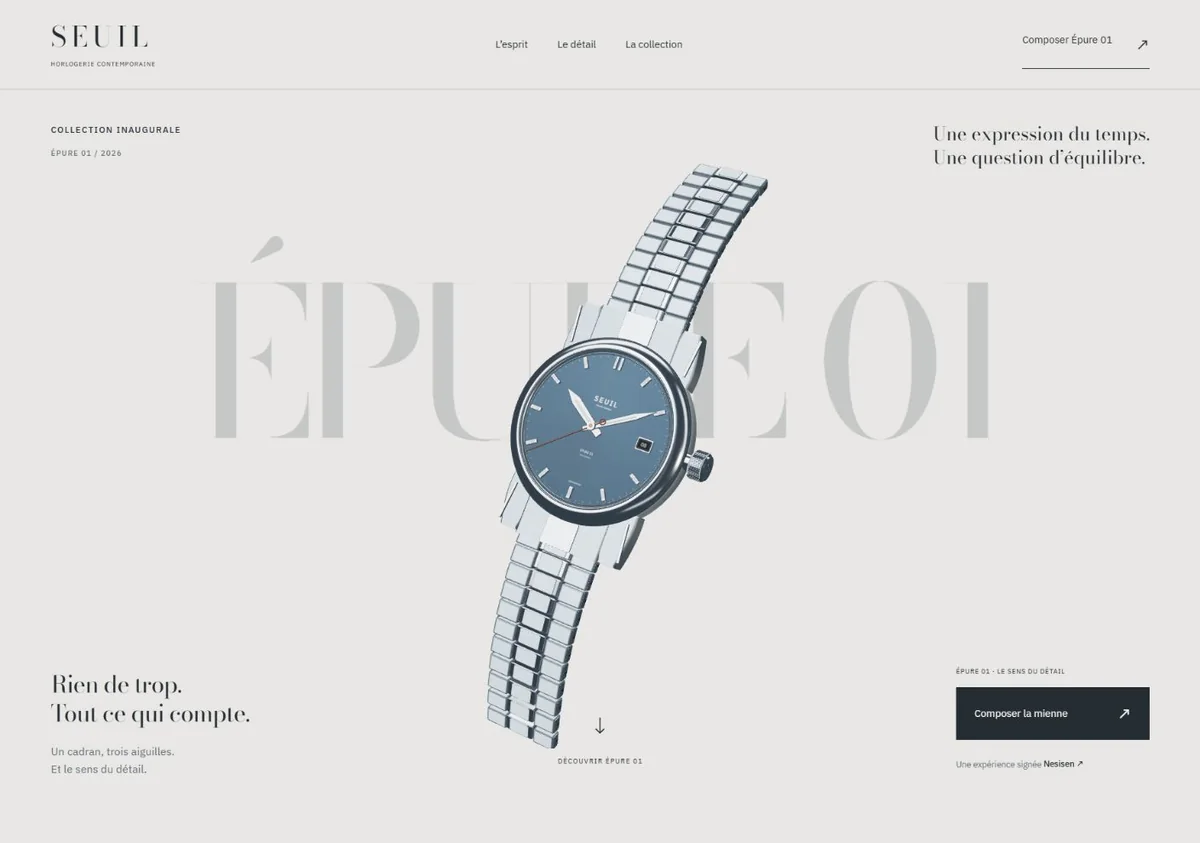
- A business website and a 3D world serve different needs.
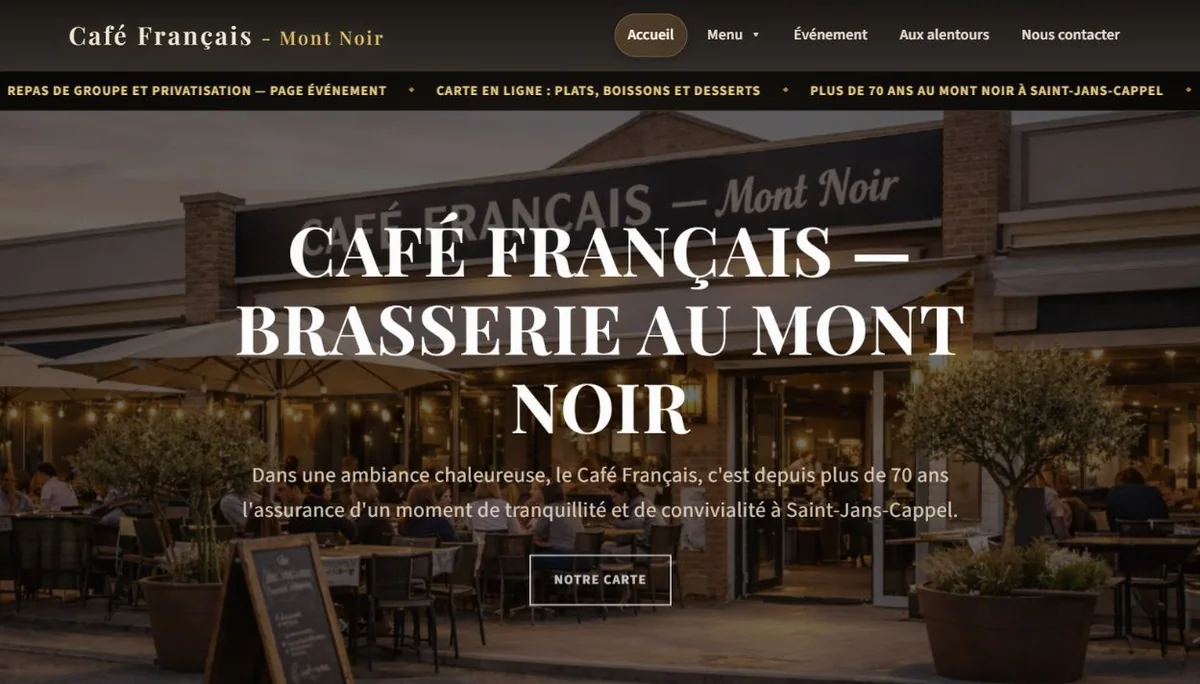
Café Français illustrates a website centred on the venue, menus and contact enquiries. This example helps discuss useful content; it is not a quote to reproduce every feature.
Explore the project ↗Start with the need, then the budget
The cost of a website starts with what it needs to do. Introducing a craft business with key information and a contact link requires different work from a hotel website, a booking journey or a 3D experience. Before comparing numbers, list your goals, pages and the actions visitors should be able to take.
Nesisen’s starting points
Presence starts at €1,000 for a static business website with a focused scope. Signature starts at €3,000 for a more comprehensive website and tailored customer journeys. 3D Experience begins at €6,000 to integrate a scene or object into a web narrative. Immersive World starts at €10,000 for a more ambitious experience with extensive 3D production.
| Offer | From | For which need? |
|---|---|---|
| Presence | €1,000 | Shops & local businesses |
| Signature | €3,000 | Hotels, driving schools & businesses |
| 3D Experience | €6,000 | Products, places & brands |
| Immersive World | €10,000 | Brands & ambitious projects |
What changes the quote
Page count, content creation, languages, connected tools and personalisation all affect the work involved. For 3D, models, scenes, interactions and mobile adaptations also need to be defined. Hosting costs, third-party services and tax treatment are set out in the quote where applicable.
Compare equivalent scopes
A useful quote explains what will be delivered and how the project will run. Ask for the page list, content you need to provide, approval stages, launch arrangements and support terms. Published prices help you find a starting point; the final budget corresponds to a scope discussed and agreed together.
Separate the build from running costs
The initial project covers the design and implementation set out in the quote. A domain, hosting, business email, booking platform or ongoing support may have separate costs. Ask who invoices them, how often, and who holds the account access. A subscription does not automatically establish domain ownership or include a handover of files: those arrangements should be clear. At Nesisen, any recurring services are specified for each project.
Prepare a brief that supports an accurate quote
Describe your business, then choose the main action visitors should take: call, request a quote, book or browse a catalogue. List the content you have and what still needs creating. A shop with its own photos and copy has different needs from a hotel with several languages and a booking tool. Divide your requirements into essentials for launch and possible later improvements. This defines a coherent first version while keeping deferred work visible.
Your checklist
- Included pages and features, with optional work identified.
- Copy, photos and translations: who prepares them?
- Approval stages and agreed feedback rounds.
- Hosting, domain, account access and file handover.
- Initial cost, recurring services and tax treatment clearly separated.
Common questions
Is a €1,000 website enough to get started?
Yes, when the need fits a static website with a focused scope. Page count, content and features must be agreed in the quote. A specialist business tool or substantial content production can change the budget.
Do you need 3D for a professional website?
No. 3D is useful when it helps explain a product, explore a place or tell a brand story. A clear, fast and carefully designed business website can be entirely right for your needs.